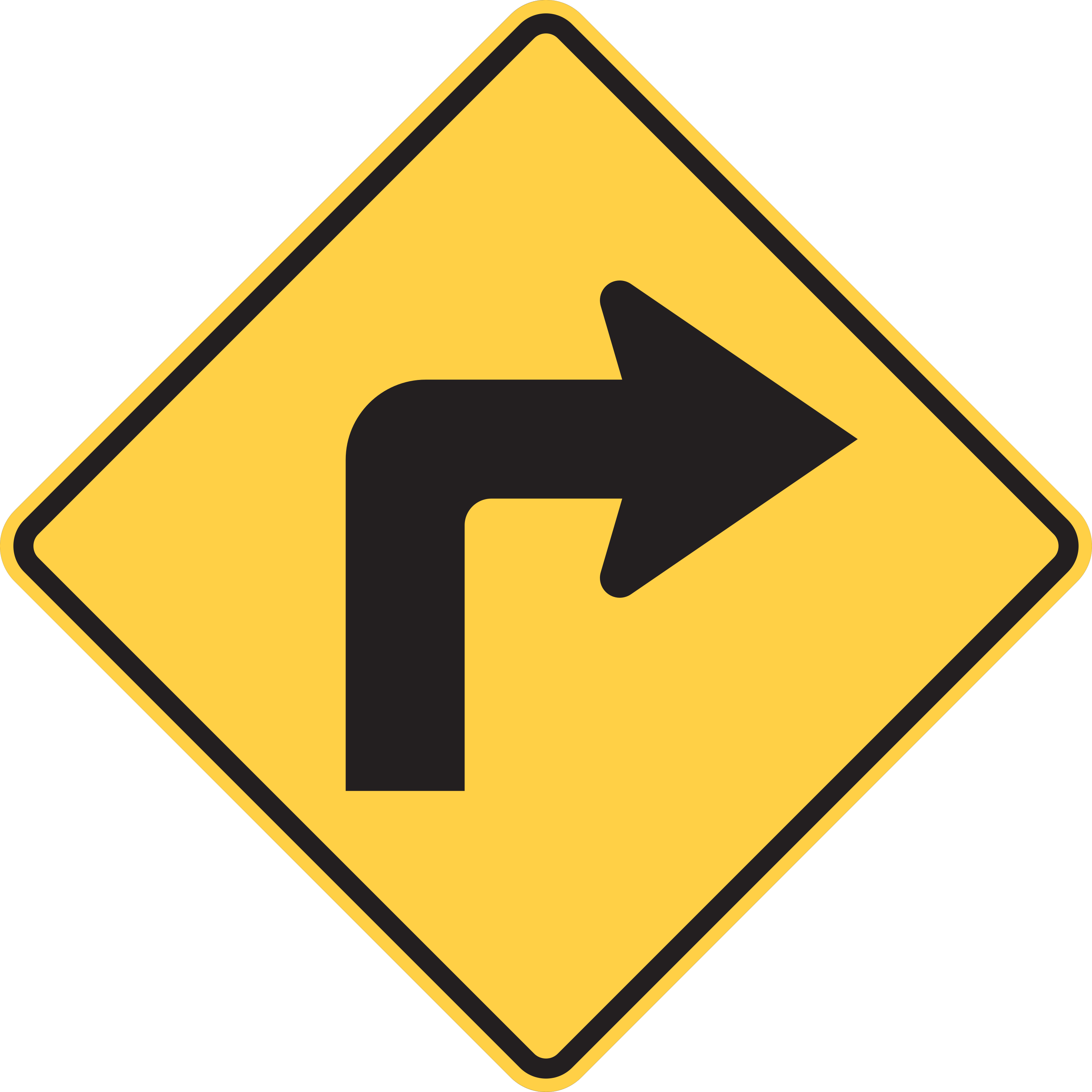
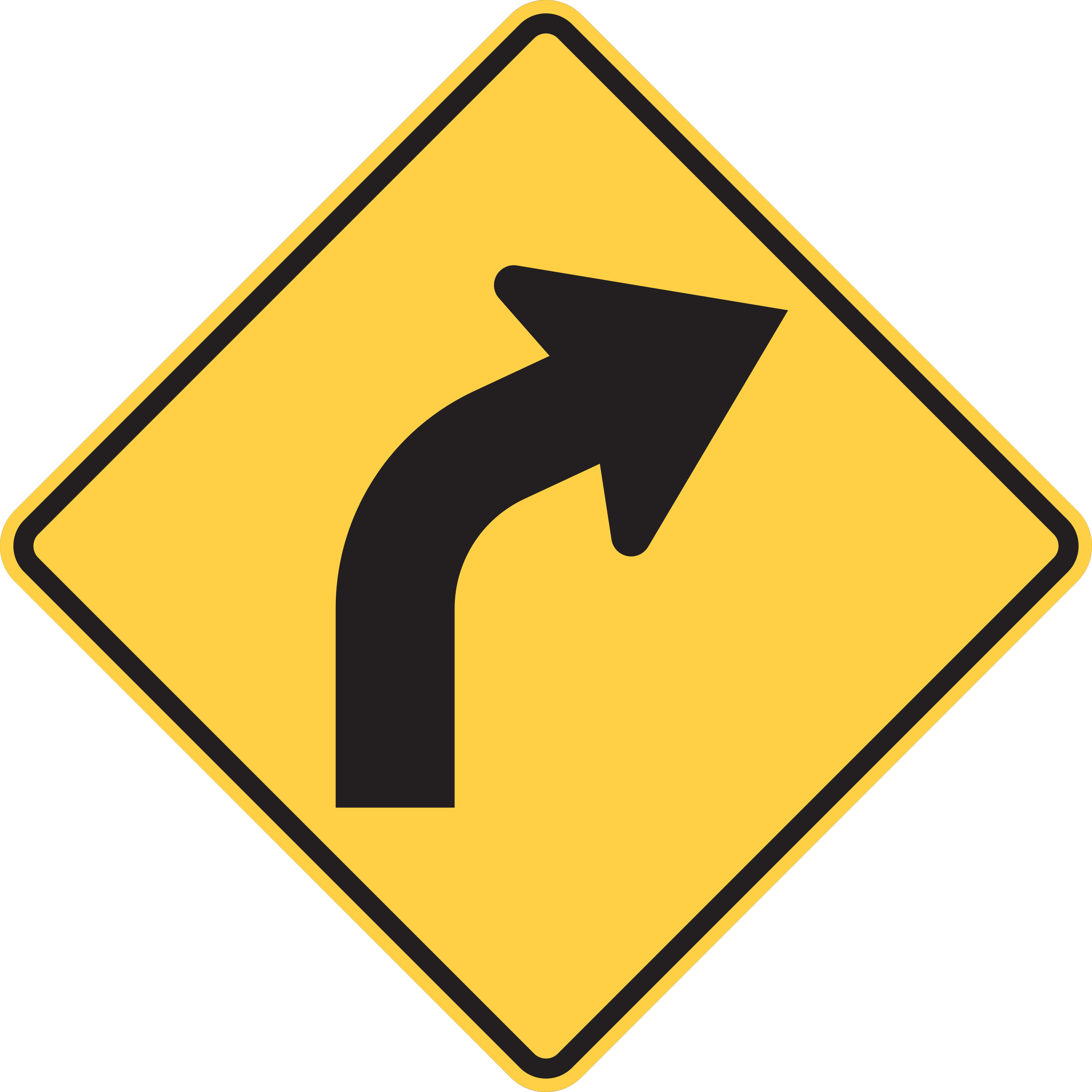
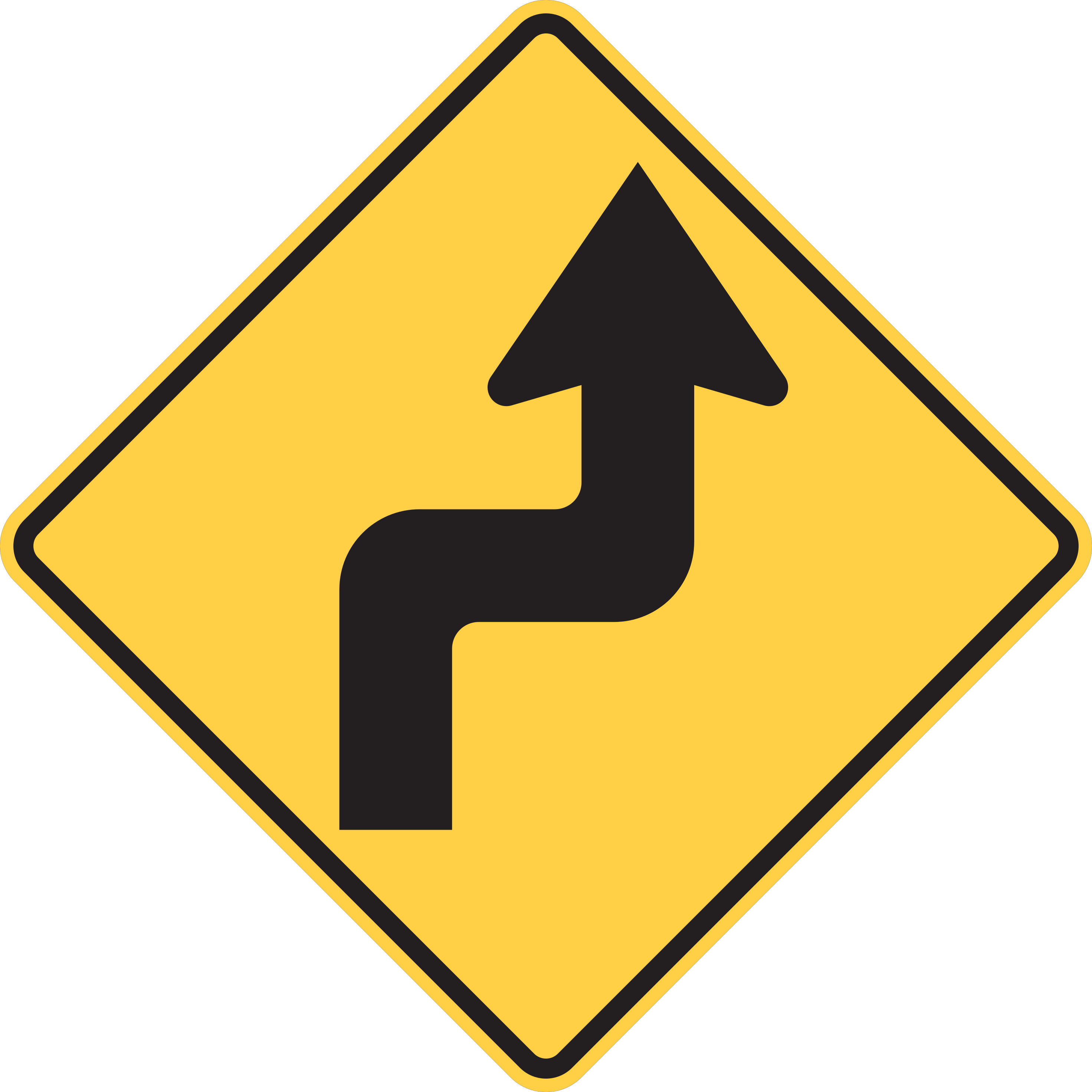
Warning signs · W1-4
Reverse Curve sign
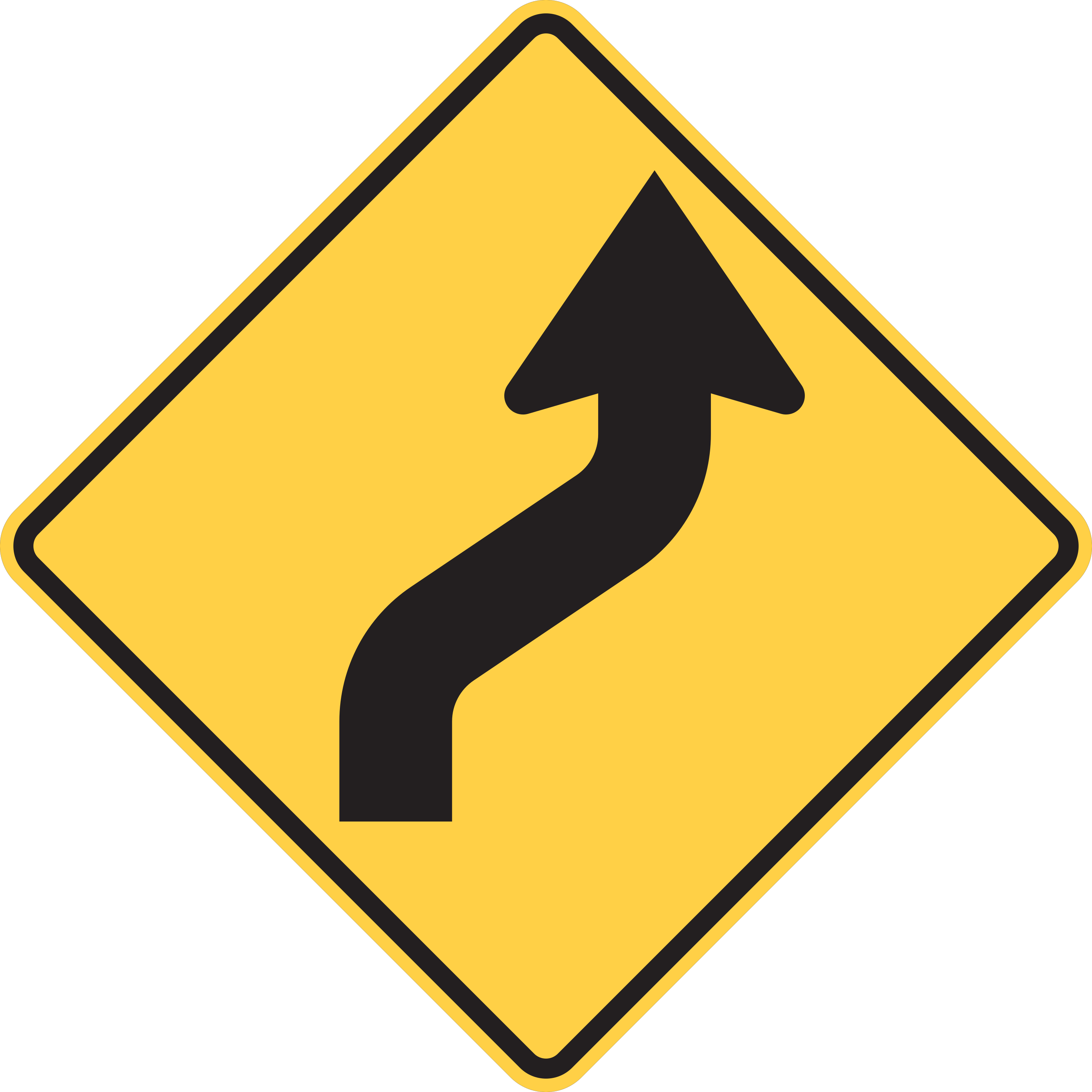
Archive file: W01-04 Horizontal Alignment - Reverse Curve/W01-04R Horizontal Alignment - Reverse Curve 30x30 2024.svg
FHWA public-use information
What it means
Two nearby curves bend in opposite directions.
Source: FHWA MUTCD — MUTCD 11th Edition with Revision 1 (December 2025), Section 2C.07, paragraph 03, PDF page 196.
.
Meaning
Reverse Curve identifies two curves in succession that bend in opposite directions. PennDOT calls this a set of two curves and tells you to slow for the sequence. It is not a warning that another road joins yours or that your lane is ending.
What to do
Choose your speed for the set rather than regaining speed immediately after the first curve. In Pennsylvania’s curve guidance, a sharper bend combined with wet or icy pavement requires the greatest speed reduction. Assess those conditions before committing to the sequence.
Where it is used
Federal guidance substitutes one Reverse Curve warning for multiple Curve signs when opposite alignment changes are separated by less than 600 feet of straight road. It is an advance description of both bends. Follow the indicated road pattern without treating the symbol as a lane-merge diagram.
A sign to tell apart
Reverse Turn is the corresponding warning for opposite sharp turns. Reverse Curve describes the curve sequence; Reverse Turn describes the sharper turn sequence in PennDOT’s examples. Both require preparation for the second direction change, while the sharper version calls for a substantial slowing response.
Practice with explanations
These are original learning questions based on the cited handbooks. Read each answer and its explanation below.
1. In PennDOT’s set-of-curves example, what happens after the road first bends one way?
- It bends back in the opposite direction.
- It immediately becomes a one-way road.
- It ends at a T-intersection.
Answer: A. It bends back in the opposite direction.
The sign describes a pair of curves with opposite directions, rather than a junction or traffic-flow change.
2. Which combination does Pennsylvania identify as requiring the greatest slowing for a curve?
- A gentle bend on dry pavement.
- A sharp bend on wet or icy pavement.
- Any bend after a wide, dry shoulder.
Answer: B. A sharp bend on wet or icy pavement.
Curve sharpness and a wet or icy surface together call for the most reduction described by the handbook.
State source coverage
Handbook coverage and sample questions do not prove that a sign will appear on your exam. Even a published test scope cannot guarantee an individual exam question.
Pennsylvania
Handbook coverage
Pennsylvania’s driver manual explicitly discusses this sign. This establishes handbook coverage, without a promise about any individual exam.
Pennsylvania permit sources · Practice with Pennsylvania questions
State variations
State-specific variations have not been independently established for this study.
Verified question coverage
These free state-bank questions were independently verified. This does not establish complete state-bank readiness, app availability or what will appear on your permit exam.
No currently verified state-bank question is available for this sign.
The linked 20-question permit quizzes do not currently include this sign.
This meaning is a federal MUTCD reference. Check your state's handbook for its rules and sign coverage; this page does not establish what appears on a state permit exam.
Try the free road sign quiz or find your state's handbook.