Warning signs · W1-2
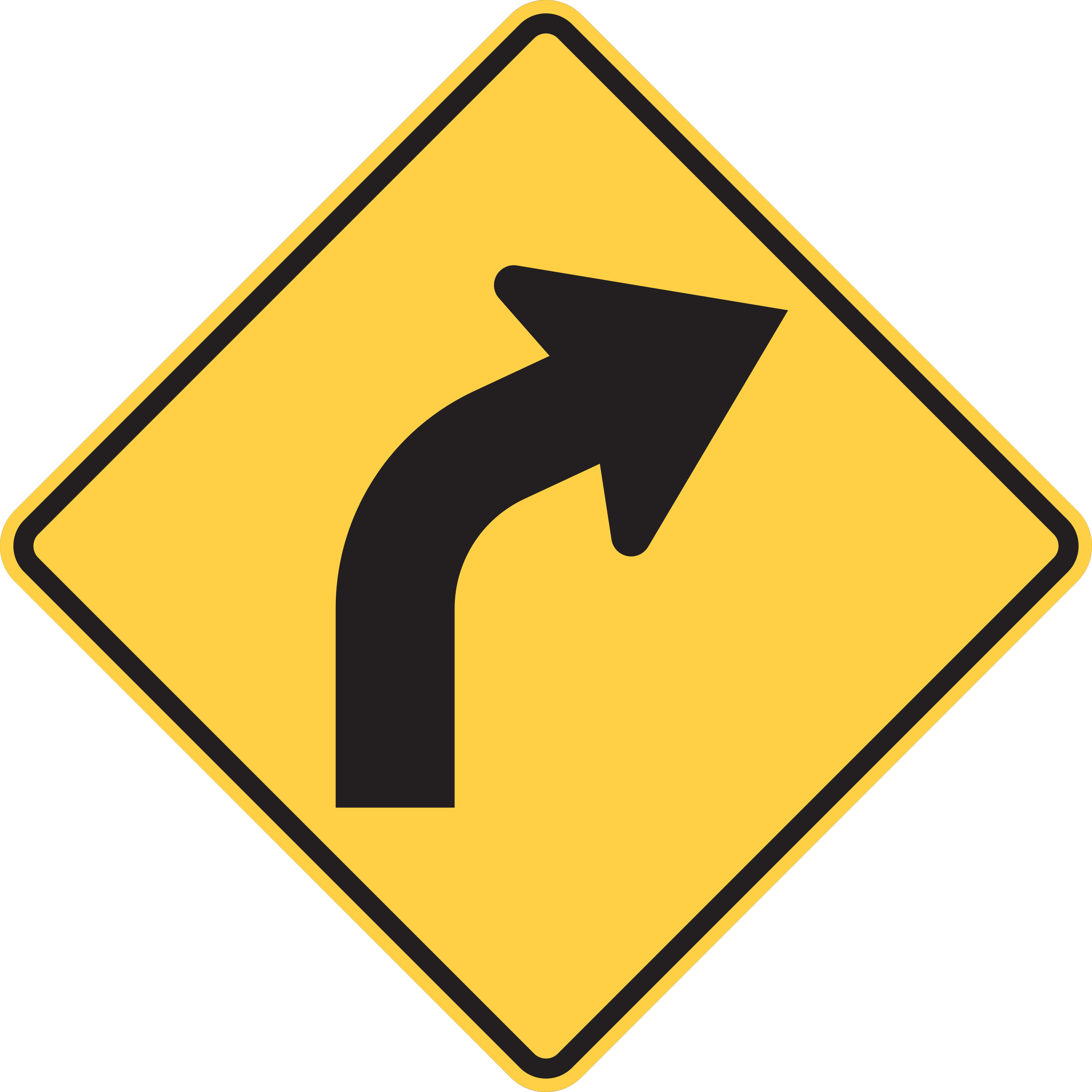
Curve sign
Archive file: W01-02 Horizontal Alignment - Curve/W01-02R Horizontal Alignment - Curve 30x30 2024.svg
FHWA public-use information
What it means
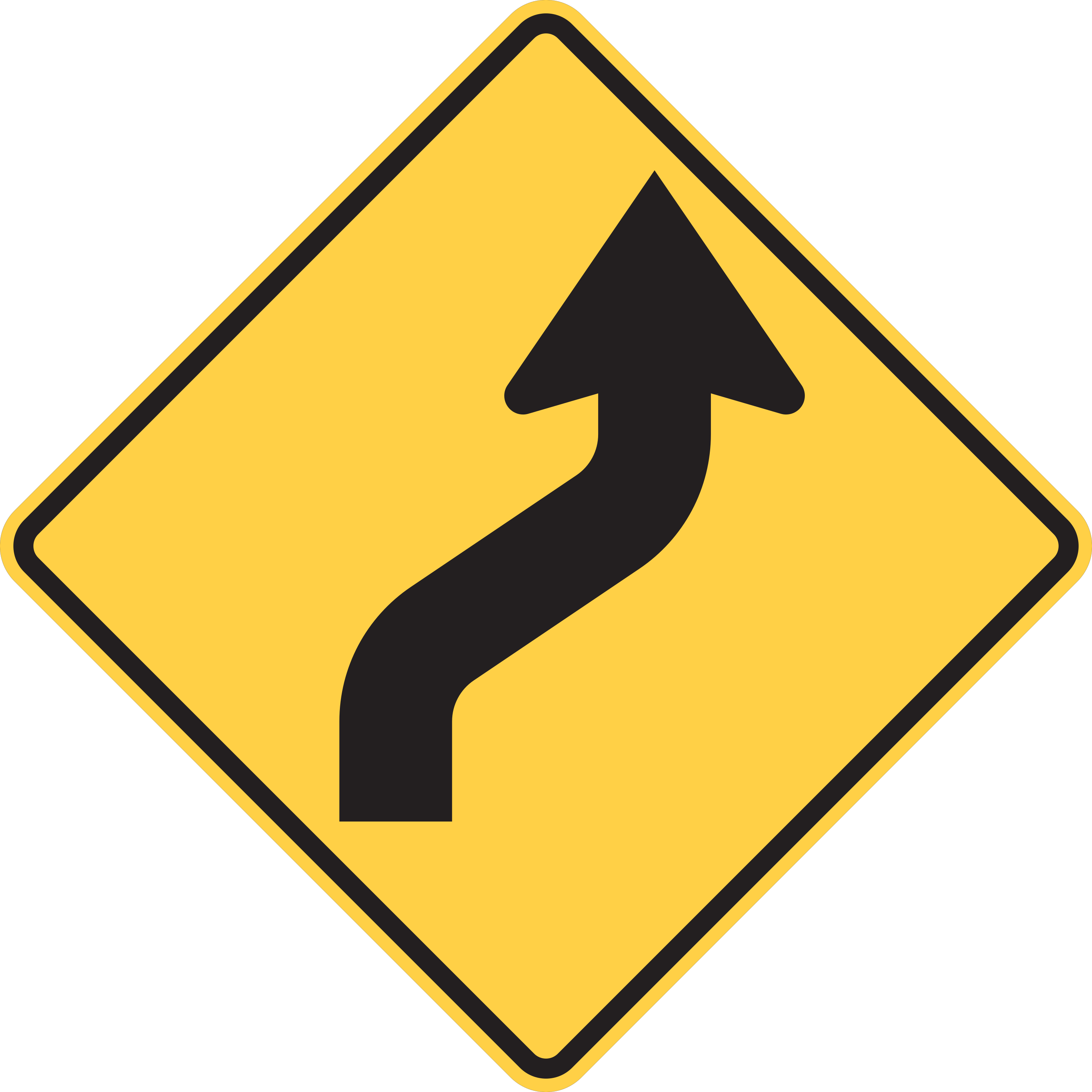
The road curves ahead in the direction shown.
Source: FHWA MUTCD — MUTCD 11th Edition with Revision 1 (December 2025), Section 2C.07, paragraph 01, PDF page 196.
.
Meaning
Curve warns that the road bends ahead. Its arrow follows the direction of the bend; it does not require you to turn onto a different street. Use the warning to prepare for the change in your path while you still have straight road available.
What to do
Pennsylvania guidance emphasizes reducing speed before you enter the curve. Waiting until you are already in the bend leaves less room to manage the turn. A sharper curve or a wet or icy surface requires a greater reduction; continue watching for opposing vehicles that may drift across.
Where it is used
This is an advance warning. The federal manual places Curve before the bend, subject to its guidance for other types of alignment signs. The useful decision happens before the curve starts: recognize the direction and reduce speed early, instead of treating the signpost as the turn itself.
A sign to tell apart
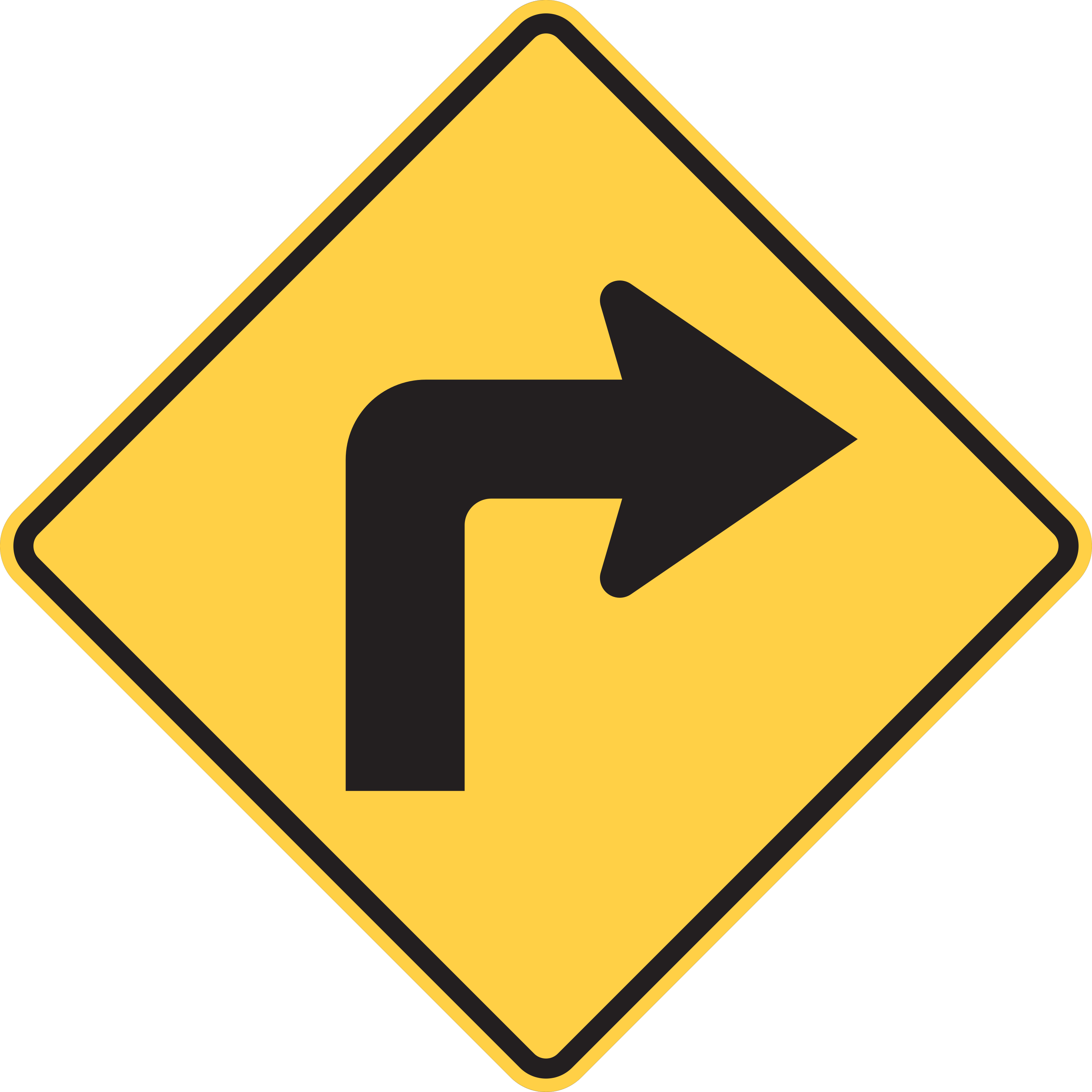
Turn uses a sharper-looking direction change for a different alignment warning. Federal guidance recommends Turn in place of Curve when the recommended speed for the bend is no more than 30 mph. Both warn about the road ahead; neither is a lane-use command to enter another street.
Practice with explanations
These are original learning questions based on the cited handbooks. Read each answer and its explanation below.
1. In Pennsylvania, when should you reduce speed for a curve?
- Before entering the bend.
- Only after the vehicle starts drifting.
- After reaching the middle of the bend.
Answer: A. Before entering the bend.
Reduce speed on the approach. The curve itself is not the place to begin correcting an excessive entry speed.
2. What does Pennsylvania guidance say about taking a sharp curve when the road is wet or icy?
- Use the same speed as on a dry straight road.
- Make a greater reduction in speed.
- Accelerate before reaching the bend.
Answer: B. Make a greater reduction in speed.
A sharp bend combined with a wet or icy surface calls for the greatest reduction in speed described in this guidance.
State source coverage
Handbook coverage and sample questions do not prove that a sign will appear on your exam. Even a published test scope cannot guarantee an individual exam question.
Pennsylvania
Handbook coverage
PennDOT explains this sign in its Pennsylvania Driver’s Manual. This is handbook coverage; it does not establish that this particular sign will appear on your Knowledge Test.
Pennsylvania permit sources · Practice with Pennsylvania questions
State variations
State-specific variations have not been independently established for this study.
Verified question coverage
These free state-bank questions were independently verified. This does not establish complete state-bank readiness, app availability or what will appear on your permit exam.
No currently verified state-bank question is available for this sign.
The linked 20-question permit quizzes do not currently include this sign.
Practice this sign in the federal 20-sign quiz. That tool uses MUTCD questions and is separate from the state-bank questions listed here.
This meaning is a federal MUTCD reference. Check your state's handbook for its rules and sign coverage; this page does not establish what appears on a state permit exam.
Try the free road sign quiz or find your state's handbook.