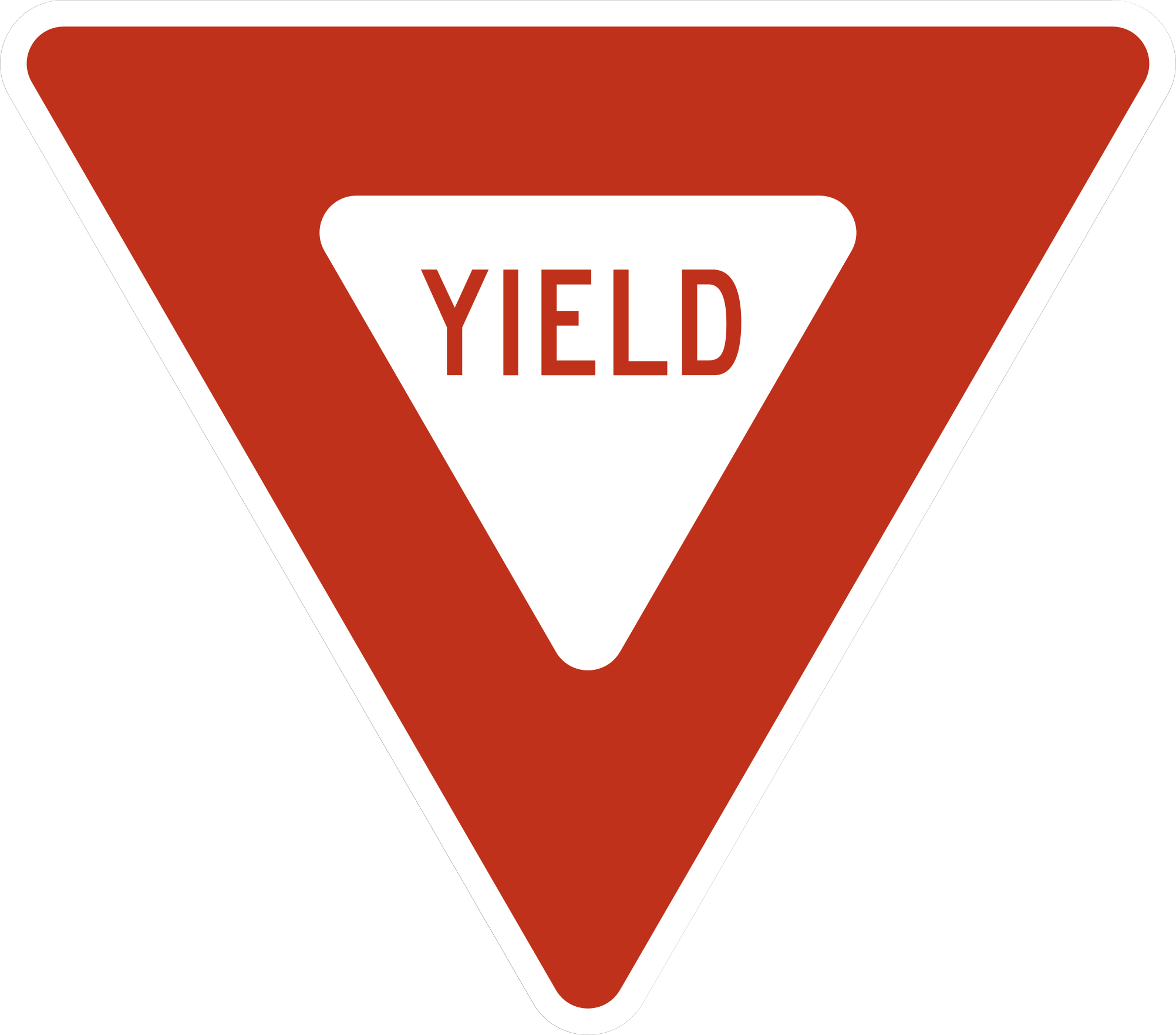
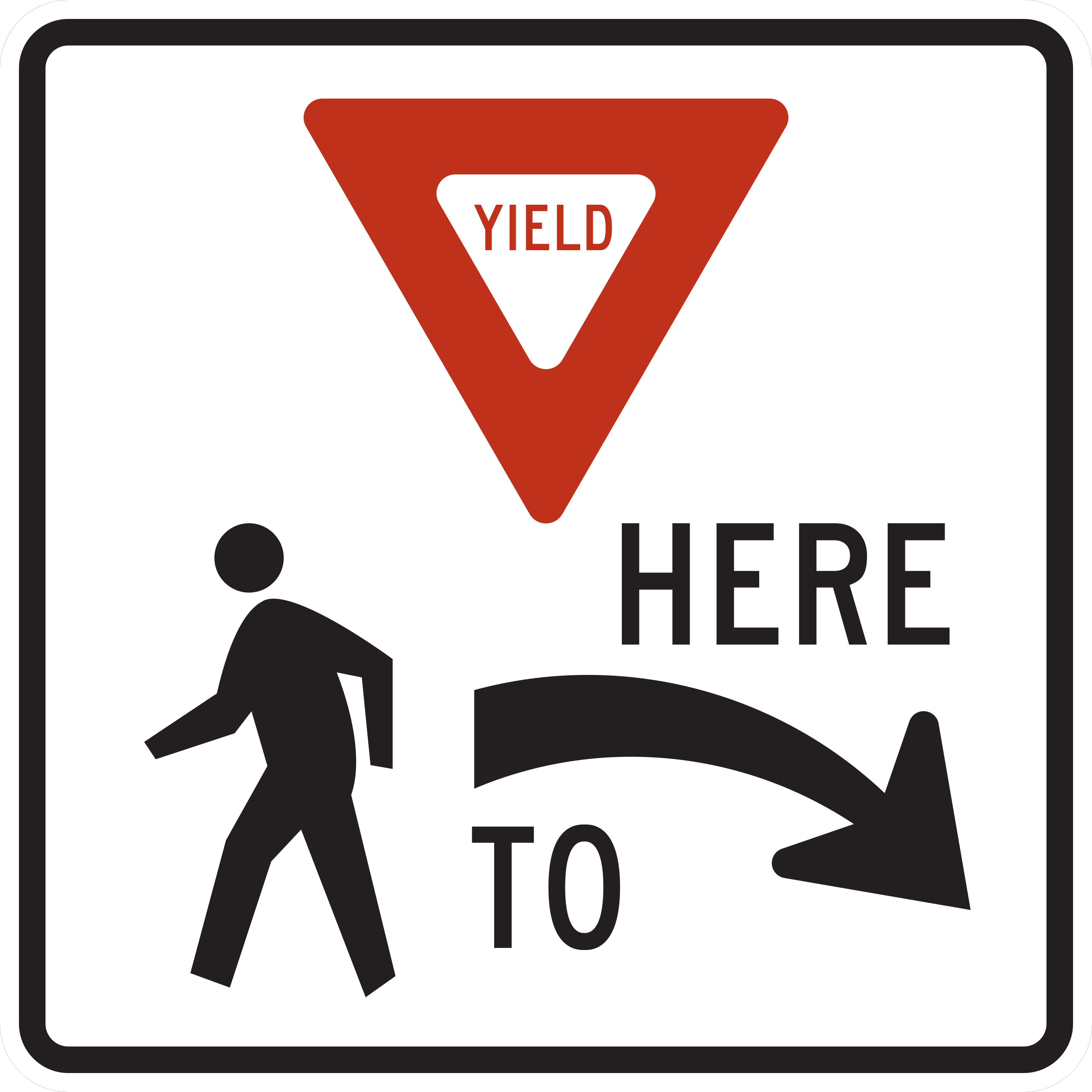
Regulatory signs · R1-3P
All Way sign
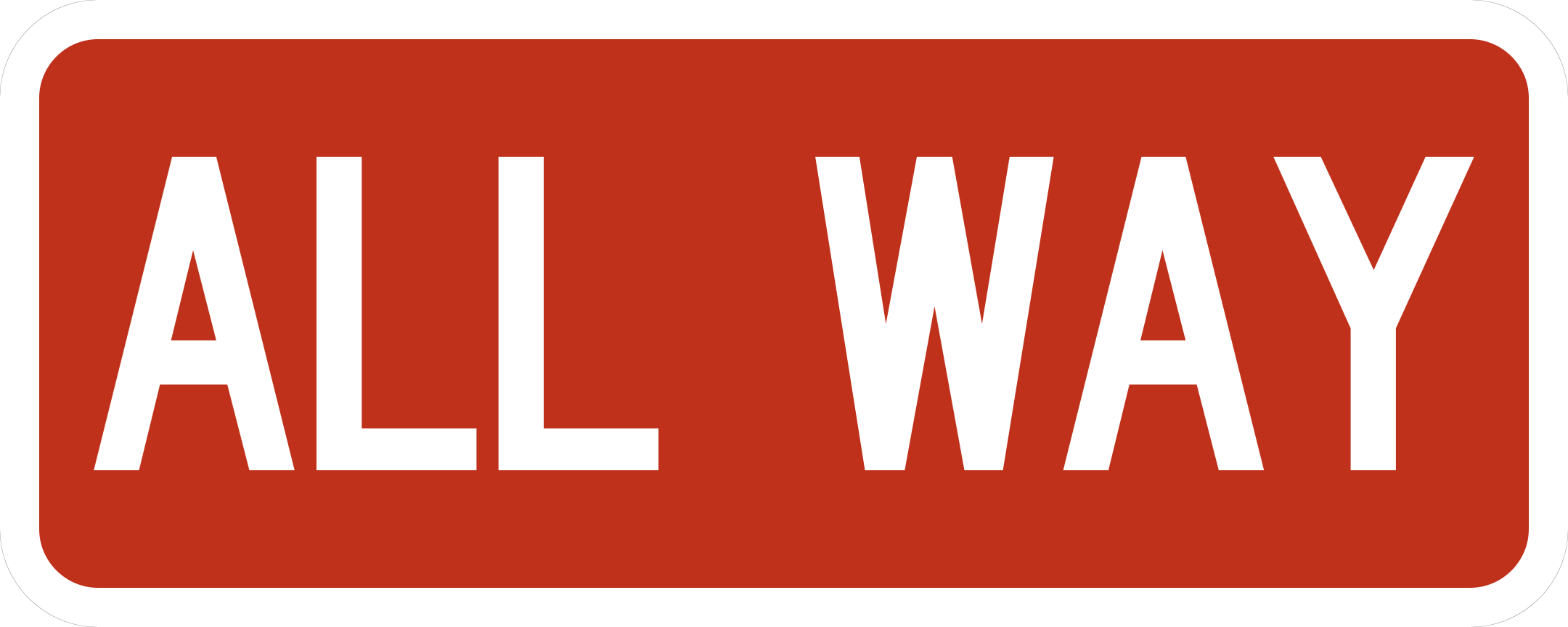
Archive file: R01-03P All Way (plaque)/R01-03P All-Way (plaque) 30x12.svg
FHWA public-use information
What it means
Every approach at this intersection has a stop sign.
Source: FHWA MUTCD — MUTCD 11th Edition with Revision 1 (December 2025), Section 2B.04, paragraph 04, PDF page 115.
.
Meaning
All Way is a companion to Stop: it tells you that every approach to the junction has a stop requirement. That information helps you anticipate how arrivals are handled. The plaque does not give one approach an automatic priority over all the others.
What to do
Florida’s handbook puts vehicles through the intersection in arrival order. The first arrival goes first. For approximately simultaneous arrivals, each driver gives way to a vehicle on the right. Notice when others arrived rather than assuming your straight-ahead movement always outranks a turn.
Where it is used
The federal standard mounts All Way beneath each Stop sign at an intersection where all approaches are stop-controlled. It is a supplemental plaque, so read it together with Stop above it. A standalone Stop without this plaque does not tell you that every other approach must stop.
A sign to tell apart
The Stop panel tells you to stop on your approach. All Way adds information about the other approaches. Florida’s arrival-order and right-side yielding rules apply to the all-way situation discussed here; do not assume crossing traffic has a stop sign merely because you do.
Practice with explanations
These are original learning questions based on the cited handbooks. Read each answer and its explanation below.
1. Two vehicles reach a Florida all-way stop at different times. Which should proceed first?
- The vehicle that reached the intersection first.
- The vehicle with more passengers.
- The vehicle that is closer to the centerline.
Answer: A. The vehicle that reached the intersection first.
Florida uses arrival order at an all-way stop. The first vehicle to reach the junction should move first.
2. You and a driver on your right arrive at a Florida all-way stop at approximately the same time. Who should yield?
- The driver on your right must yield to you.
- You must yield to the driver on your right.
- Neither driver is required to yield.
Answer: B. You must yield to the driver on your right.
When arrivals are approximately simultaneous, each driver yields to traffic on the right.
State source coverage
Handbook coverage and sample questions do not prove that a sign will appear on your exam. Even a published test scope cannot guarantee an individual exam question.
Florida
Handbook coverage
Florida’s driver handbook explicitly discusses this sign. This establishes handbook coverage, without a promise about any individual exam.
State variations
State-specific variations have not been independently established for this study.
Verified question coverage
These free state-bank questions were independently verified. This does not establish complete state-bank readiness, app availability or what will appear on your permit exam.
No currently verified state-bank question is available for this sign.
The linked 20-question permit quizzes do not currently include this sign.
This meaning is a federal MUTCD reference. Check your state's handbook for its rules and sign coverage; this page does not establish what appears on a state permit exam.
Try the free road sign quiz or find your state's handbook.